 CALL US! 904.406.7232 FREE CONSULTATION

Orlando FL Public Adjuster | Gold Star Adjusters
Orlando’s Property Risks Don’t Come From the Coast. They Come From the Sky, the Ground, and the Fine Print in Your Policy.
Orlando sits 60 miles from the nearest coastline, which leads many Central Florida homeowners to believe they’re insulated from the property damage risks that define Florida’s coastal markets. Hurricane Ian ended that assumption for a generation of Orange County residents in September 2022.
Ian made landfall on Southwest Florida’s coast as a Category 4 storm — but its track carried it directly across Central Florida, delivering wind damage, torrential rainfall, and inland flooding throughout Orange, Osceola, and Seminole counties that caught thousands of homeowners completely unprepared. Properties that had never flooded. Roofs that failed under wind loads their owners never anticipated. And an insurance claims cycle that revealed how many Central Florida homeowners were underinsured, underprepared, and underrepresented when the process began.
Gold Star Adjusters works with Orlando homeowners to make sure that when damage happens — from Ian’s aftermath, from the afternoon thunderstorm that just took off half your roof, or from the sinkhole that appeared in your backyard — your insurance claim reflects everything you’re entitled to recover.
Central Florida’s Real Weather Risk: What Actually Damages Orlando Homes
Orlando’s dominant property damage profile isn’t named hurricanes — it’s the relentless convective storm pattern that makes Central Florida the lightning and afternoon thunderstorm capital of the United States. From May through October, daily storm cells move through the Orlando metro bringing high winds, large hail, and sudden downbursts that damage roofing systems, crack tile, compromise gutters, and drive water into structures through vulnerabilities that weren’t visible before the storm.
These events are frequent enough that many Orlando homeowners have multiple claim-worthy damage events in a single season — and don’t file any of them because they assume the damage is minor, because they’re worried about their rates, or because no single event feels significant enough to justify a claim. The cumulative effect of undocumented storm damage is a roofing system that fails earlier than it should and a claim that carriers can more easily dispute when the damage becomes undeniable.
Hail damage in Central Florida follows the same pattern we described on our statewide hail damage page — largely invisible from the ground, contested through cosmetic damage exclusions, and chronically underestimated in carrier assessments that miss HVAC damage, skylight impact, and the functional deterioration that precedes visible failure.
Sinkholes: Central Florida’s Unique Ground-Up Risk
No other major Florida city we serve has the sinkhole exposure that defines Central Florida’s geology. Orlando and the surrounding region sit atop karst limestone — a porous rock formation that dissolves over time as groundwater moves through it, creating cavities that can collapse suddenly or subside gradually beneath residential foundations.
Sinkhole coverage in Florida has its own specific legislative and policy history. Carriers are required to offer catastrophic ground cover collapse coverage, but the broader sinkhole coverage that addresses the slower subsidence that precedes dramatic collapse is subject to policy language that varies significantly and has been the subject of extensive litigation in Central Florida specifically.
If your home shows signs of sinkhole activity — foundation cracks, doors and windows that no longer close properly, sloping floors, or depressions in the yard — the claim process requires engineering assessment, geotechnical investigation, and a level of technical documentation that is genuinely different from any other property damage claim type. Gold Star Adjusters has experience navigating sinkhole claims in Central Florida’s specific geological and regulatory environment.
Ian’s Inland Flooding Legacy
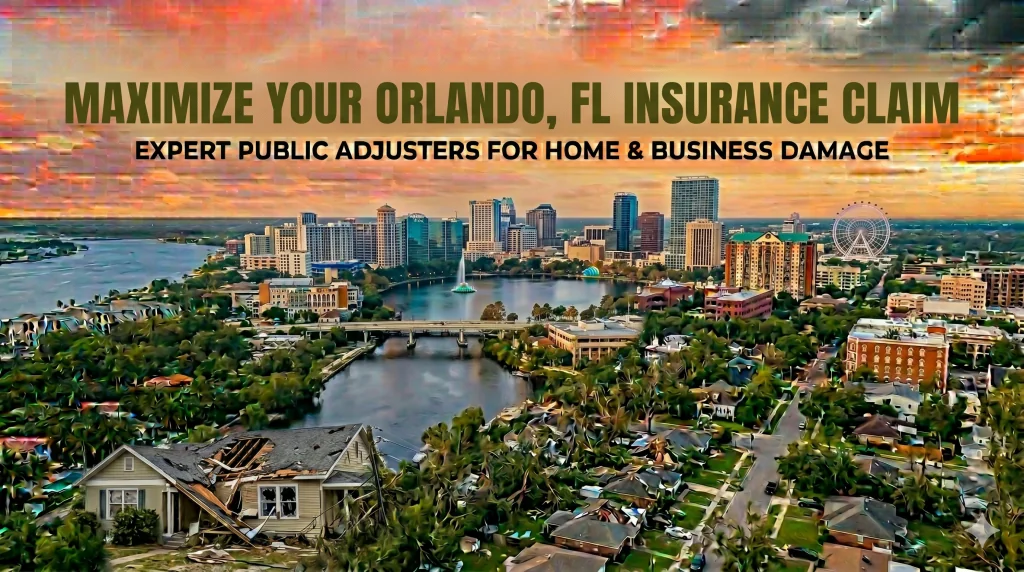
Hurricane Ian’s rainfall totals across Central Florida were historic. The storm dumped over a foot of rain on parts of Orange and Osceola counties, overwhelming drainage infrastructure and pushing water into properties that were nowhere near a designated flood zone and carried no flood insurance.
The coverage situation for these homeowners was complicated and often painful. Homeowners policies exclude rising water and flood — but may cover water damage from overwhelmed drainage systems, roof intrusion, or other mechanisms depending on how water entered the structure. Sorting out which portion of Ian’s water damage was covered under which provision — or making the case that coverage existed at all — required exactly the kind of policy analysis and documentation work that most homeowners couldn’t do alone in the aftermath of a major storm.
If your property experienced Ian-related water damage and you either didn’t file or received a settlement that didn’t cover your full loss, a claim review may still produce results.
Orlando’s Historic Neighborhoods and Lakefront Properties
Winter Park, College Park, Delaney Park, and the Audubon Park Garden District contain some of Central Florida’s most architecturally significant residential stock — Craftsman bungalows, Colonial Revival homes, and mid-century construction with original hardwood floors, plaster walls, and period details that standard replacement cost estimating fails to value accurately.
Orlando’s lakefront properties — along the Butler Chain, Lake Conway, Lake Nona, and the countless named lakes throughout the metro — carry a water exposure profile distinct from coastal or river flooding. Lake flooding during major rain events, dock and seawall damage, and the moisture intrusion challenges specific to lakefront construction all present claim complexities that generic assessments miss.
The Vacation Rental and Short-Term Rental Corridor
The Kissimmee and Disney corridor south of Orlando contains one of the highest concentrations of short-term vacation rental properties in the United States. When storm or water damage affects these properties, lost rental income during peak booking periods — spring break, summer, the holiday season — is a real financial loss that belongs in the insurance claim.
Gold Star Adjusters documents vacation rental income loss as a standard component of every STR property claim we handle in the Orlando and Kissimmee corridor, using booking history, platform data, and market comparisons to build a complete picture of what the damage actually cost beyond structural repair.
What We Handle in Orlando
Gold Star Adjusters manages residential and commercial property claims throughout Orlando and Central Florida — wind and hail damage, hurricane damage, inland flooding and water intrusion, fire and smoke, mold, sinkhole claims, roof damage, theft, and vacation rental income loss. We conduct our own independent inspection, build thorough documentation, and negotiate directly with your carrier.
Our fee is a percentage of your final settlement. No upfront cost, no recovery means no fee.
Free Consultation for Orlando Property Owners
Whether your claim is storm-related, sinkhole-related, or anything in between, contact Gold Star Adjusters for a free consultation. Central Florida’s insurance market has changed — make sure your claim reflects where it is today.
Gold Star Adjusters serves Orlando and all of Central Florida — including Winter Park, College Park, Kissimmee, Ocoee, Apopka, Lake Nona, Dr. Phillips, and surrounding Orange, Osceola, and Seminole counties. Contact us for a free consultation.
Error: Contact form not found.